Each of your feet contains twenty-six bones, thirty-three joints, more than a hundred muscles, tendons and ligaments, and somewhere in the region of seven thousand nerve endings. They carry you roughly a hundred and fifteen thousand kilometres in a lifetime. And then, most evenings, they get taken off and ignored.
Reflexology starts from a simple observation: that much nervous tissue, packed that densely, responds to sustained pressure in ways the rest of the body does not.
What is actually happening
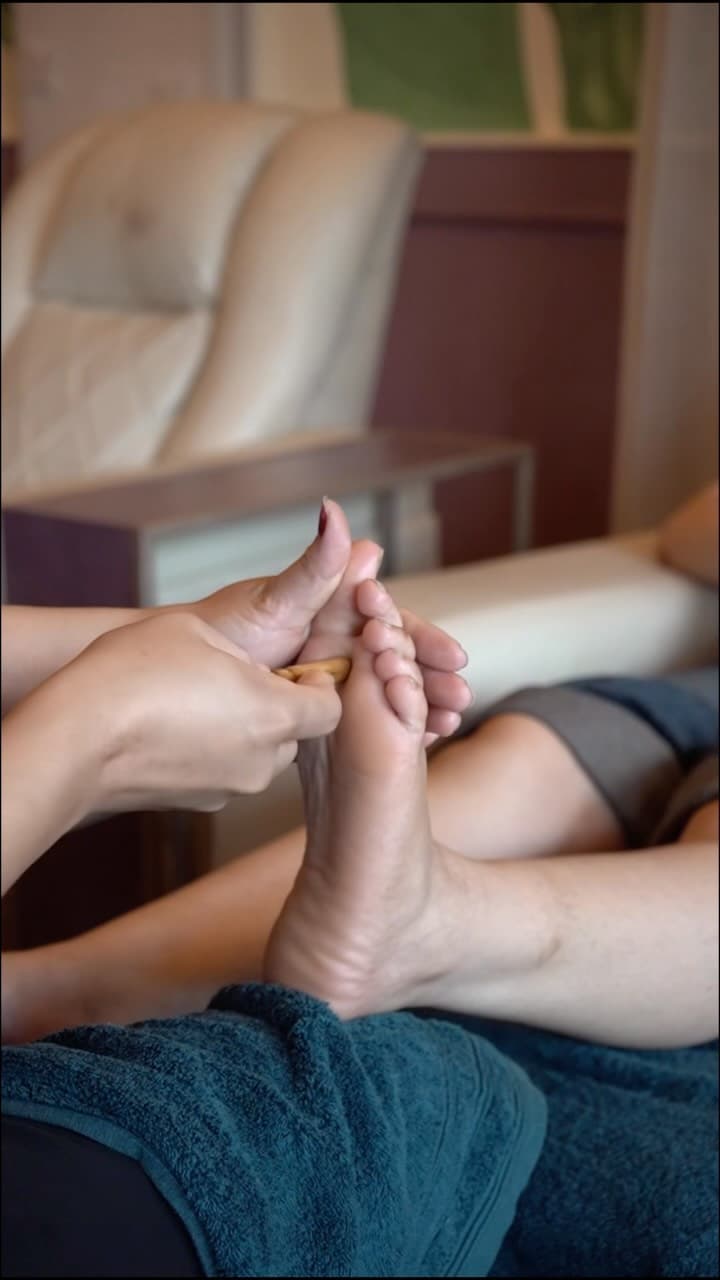
Set aside the wall charts for a moment. Three things are reliably true when a trained thumb works slowly through the sole of your foot.
Circulation improves locally. Feet sit at the far end of the return journey, fighting gravity the whole way. Firm, directional pressure assists venous return and lymphatic drainage. This is why swollen feet feel narrower afterwards — not a metaphor, a measurable change.
The nervous system changes register. Sustained pressure on a dense nerve bed nudges the autonomic system from sympathetic — the alert, braced state most of us hold by 7 PM — toward parasympathetic. Heart rate settles. Breathing deepens without instruction. This is why guests fall asleep during foot work far more often than during a back massage.
Fascia releases. The plantar fascia is a thick band running heel to toes, and it stiffens when you stand all day or wear unforgiving shoes. Slow, held pressure lets it lengthen. A rushed session rubs the surface; a good one waits.
What about the maps?
You have seen the diagrams: a foot divided into zones, each labelled with an organ. The honest position is that the mapping is a traditional framework rather than a demonstrated anatomical fact, and anyone promising to fix your liver through your arch is overselling.
What holds up is the part that matters. Specific points on the foot are reliably tender in people carrying specific kinds of tension, and working them produces relief that spreads past the foot. Our therapists use the maps as a vocabulary for where to look, not as a medical claim.
How to tell a good session from a rushed one
- You are asked about pressure before it starts, and checked mid-way. Pressure is a preference, not a setting.
- The soak comes first. Warm water softens tissue. Working a cold, dry foot is both less effective and less pleasant.
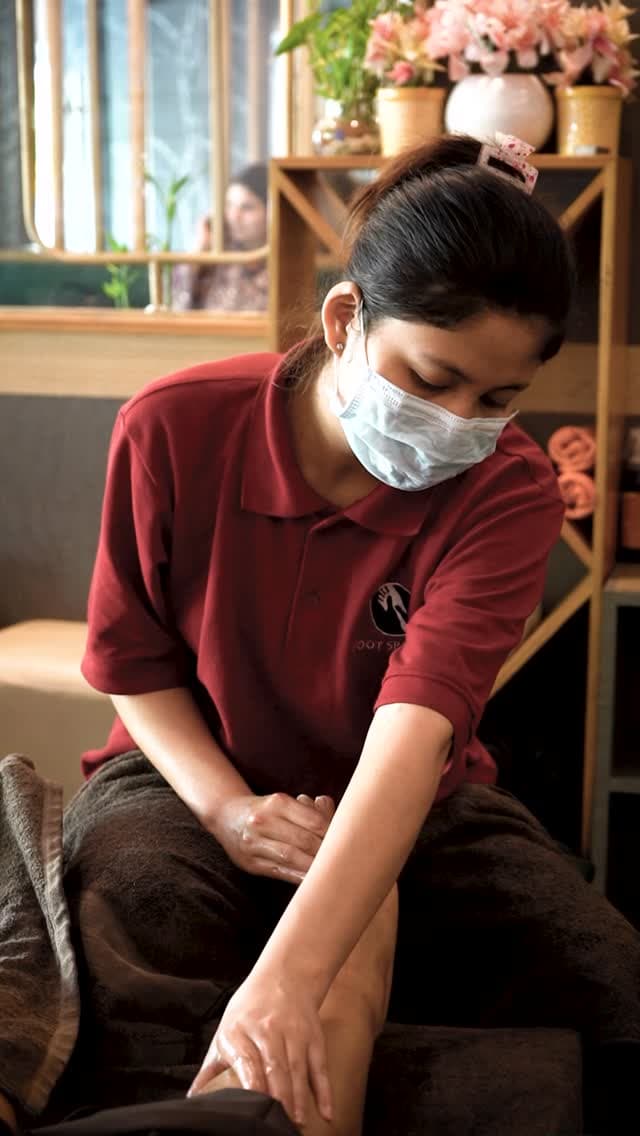
- Time is spent on the heel and arch. These take patience. If your therapist moves through them quickly, the session is a polish, not a treatment.
- There is no visible clock. Watching the time is the therapist's job, not yours.
- You are quiet afterwards. A good session leaves you slightly slow to stand up. That is the parasympathetic shift, and it is the whole point.
Between visits
You do not need equipment. Roll a tennis ball under each arch for two minutes an evening, slowly, pausing where it complains. Pull each toe gently away from the foot. Then leave your feet alone and go to bed.
Everything else, we will handle.